Episode 14
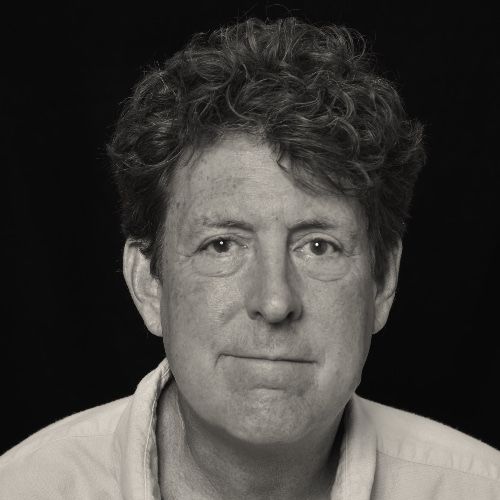
Migraine and Cannabis with Dr. Tally Largent-Milnes
Migraines, affecting 39 million Americans, are a complex neurological disorder with four phases: prodrome, aura, headache, and postdrome. The causes are poorly understood but involve abnormal brain activity, nerve signals, blood vessels, and chemical messengers, with triggers varying widely between individuals. The endocannabinoid system, which cannabis interacts with, may play a role in migraines, and clinical endocannabinoid deficiency could be a contributing factor.
Clinical endocannabinoid deficiency, characterized by low levels of anandamide and 2-AG, may contribute to migraine, fibromyalgia, and irritable bowel syndrome. Restoring 2-AG levels can alleviate migraine symptoms, while depleting it can induce headaches. Cannabis, particularly strains with higher THC content, may be effective for migraine relief, but it’s crucial to consult a physician and purchase from regulated dispensaries for safety and efficacy.
Microdosing cannabis could be an effective preventative strategy for migraine headaches, though it may not be effective for reversing headaches once they occur. Many clinicians lack formal education on cannabis and its potential interactions with other medications, making it challenging for patients to receive informed recommendations. Researchers face challenges in conducting cannabis research due to its Schedule I status, but there are avenues for obtaining cannabis for research purposes.
The majority of cannabis research still relies on government-supplied compounds, but the field is opening up to include pure forms of THC and CBD. Rescheduling cannabis to Schedule III would facilitate research but could complicate patient access due to stricter regulations and potential pharmacy limitations. Future research will explore the interaction between cannabis, hormones, and environmental factors like microplastics, as well as the potential for migraines in other species.
Primary Topics #migraine #migrainerelief #cannabisformigraine #medicalcannabis #endocannabinoidsystem #chronicpain #headacherelief #migraineawareness
Scientific/Medical Terms #endocannabinoiddeficiency #anandamide #2AG #cannabinoidreceptors #THC #CBD #pharmacology #neuroscienceresearch #painresearch
Condition-Related #chronicmigraine #migrainewithAura #clusterheadache #medicationoveruse #hormonalheadache #womenshealth #painmanagement
Cannabis Education #cannabiseducation #cannabisscience #cannabisresearch #medicalmarijuana #cannabinoids #entourageeffect #microdosing #terpenes
Audience/Lifestyle #cannabisboomer #over50wellness #seniorsandcannabis #cannabiscommunity #plantmedicine #holistichealth #alternativemedicine
Guest/Institution #UniversityofArizona #DrTallyLargentMilnes #painscience #cannabispodcast
Transcript
On this edition of the Cannabis Boomer Podcast we are diving into migraine—a neurological condition that affects far more people than you might realize. The Cannabis Boomer welcomes Dr. Tally Largent-Milnes PhD, Associate Professor of Pharmacology at the University of Arizona. Dr. Largent-Milnes has conducted several ground breaking studies on cannabis and migraines.
But first, please welcome Dr. Alex Terrazas PhD, otherwise known as the Cannabis Boomer.
[:Migraine impacts approximately 39 million Americans with women bearing a disproportionate burden. About 18% of women experience migraines compared to just 6% of men. This gender disparity becomes even more pronounced during reproductive years, suggesting hormonal influences play a significant role. The causes of migraine are poorly understood.
The research points to a complex interplay of factors. At the core, migraines involve abnormal brain activity, affecting nerve signals, blood vessels, and chemical messengers. Triggers vary widely between individuals. Common culprits include hormonal fluctuations, certain foods stress. Sleep disruption and environmental factors like bright lights or strong odors.
There is also a strong genetic component. If one parent has migraines, you have about a 50% chance of developing them too. What makes migraines particularly challenging is that they're not just headaches, they're a full neurological event. That can include visual disturbances, nausea, sensitivity to light and sound, and in some cases debilitating pain that can last hours or even days.
And with that, it is time to welcome our guest
Tally Largent-Milnes, Professor of Pharmacology at the University of Arizona. Thank you for joining me today to talk about the important topic of cannabis and migraine. Before we get into that, maybe you can tell me a little bit about your background and how you got started looking at cannabis.
[:I did my bachelor's degree here at the University of Arizona in biochemistry, molecular biophysics. And then I stayed to do a PhD here in medical pharmacology as well. So I'm homegrown. And at the time I worked with opioids and understanding opioid mechanisms and so on and so forth.
During my postdoc, I moved to Oregon Health and Science University where I was studying trigeminal pain, so face pain. And that led to me ultimately coming back as faculty here at the University of Arizona. Where I started my lab looking at headache. And so I still had an interest in opioids but I was also learning more about the endocannabinoid system.
And so this intersect of the endocannabinoid system, which is the system where cannabis actually works within your body and migraine, which is where many patients who are using medical marijuana are using for headache. It became a natural intersect for my work to be looking at migraine, the endocannabinoid system, and cannabis itself.
[: [:So we have what's called a prodrome. And that's where you can feel things are kind of getting off. A lot of times patients will have fatigue, some nausea and vomiting, increased sensitivity to light and sound and smells. Some patients have intense yawning episodes, which sounds really interesting.
And so it's really this whole body prodromic pre headache experience. The second phase occurs in about 14 to 20% of patients, and it's called an aura. And this is usually typified by visual disturbances. So patients will have disruption in their peripheral vision. And so it can, it can be blurriness of vision, it can be total loss of vision in that peripheral field. And that usually lasts for a couple of hours. Then comes the headache phase, which again, all of, so those symptoms that I was talking about during the prodrome, the nausea, the vomiting, the light, sound sensitivity, smell sensitivity those things persist throughout the entire episode. So then there's the headache phase, and that headache phase can be anywhere from four to 72 hours.
And then there's the fourth phase, which we call postdrome. And it's been most often characterized as like a hangover headache, post alcohol drinking hangover. And so again, you still have that fatigue. You kind of feel off. And so migraine isn't just a, a pain disorder, it's really a whole body disorder.
And when we look across the lifespan, we know that migraine incidence is very similar in boys and girls pre puberty. And then at puberty we have a, a very clear split in that most migraine patients about 75% are female during the productive and reproductive period. And then at menopause or in men, what we call andropause, which is the testosterone equivalent of menopause it comes back to this one-to-one type ratio. And so there's some clear hormonal influences. There's stress. So during those productive years for both men and women, it's high stress. And so we know that there are certain triggers that can trigger migraine within a certain person as well as they, they are different between people, right?
So things like wine and cheese can, can do that. So the sulfides and that, you know, changes in weather, changes in environmental exposures stress is a very well-known trigger of migraine. And it's interesting with stress because it's not so much the being stressed so much as the headache happens once the stressor is removed,
[: [: [: [:But our body also makes their own key that opens those protein locks. Okay? And so what we have are these lipid molecules, so fat-based molecules called anandamide and two arachidonic glycerol. So I'll call that 2-AG. And so these are lipids that are made on demand. So one of the examples that I like to use for, for my students, so I, I've used my hands a lot, so just kind of go with me on this.
When you have a synapse, so a neuron that's talking to another neuron, wah, wah wah, kind of Charlie Brown like we think of, we think of neurotransmitters, those chemical messengers coming from the wah, wah, wah. So what happens is these, these lipids, these fats, anandamide and 2-AG are actually made over here on this, what we call the postsynaptic neuron.
And they're released to tell the "wa w wa wa, wa wa" stop. I got the message. You don't need to keep telling me. And so they're really the break so that you don't have this over excitability of neurons that can ultimately lead to damage over here. And so when we think about clinical endocannabinoid deficiency, what we're talking about is this is happening pain in this case but we're not actually making.
The endocannabinoids and so you no longer have that break. And what Dr. Russo has found among others is that patients who have migraine as well as patients who have fibromyalgia and irritable bowel syndromes and diseases have lower levels of anandamide and 2-AG circulating in their plasma, so in their blood as well as in the cerebral spinal fluid.
So the fluid that surrounds the brain. And so that's what clinical endocannabinoid deficiency is. And what we found in my lab is that if we can restore the levels of 2-AG, we can alleviate migraine like symptoms using preclinical models. We've also found that if we actually just take a compound to deplete two Ag, so it blocks its synthesis.
You can induce a headache like state. And so it really suggests that the overall balance of 2-AG as well as anandamide. So we've seen this with, with anandamide in some time points as well, that if you can normalize those levels back to a balance, that it can prevent and reverse established headache.
[: [:It works pretty well in terms of higher THC content for pain compared to something like cannabidiol. For inflammatory disease states a strain that has more cannabidiol than THC tends to work a little bit better. But what I would suggest is people go talk to their physician.
If they decide to use buy from a dispensary, because it's typically going to be of higher quality, it's going to be tested for pesticides in many states. And so the safety component, you're not at just the whim of whoever's growing and you don't know what they've grown with or what they've used on it.
And the THC content or CBD content may not be what is actually there. So if you get it from a regulated dispensary, you'll actually know what the tested levels, not just the claimed levels of the content is. And then for headache, you know, there's been some studies out of university of California, San Diego showing that there's a pretty good efficacy for migraine. As with any use, you know, making sure to take tolerance breaks.
As far as what routes, you know, tinctures versus smoking versus, vaporizing, there's not a lot of clear cut data in terms of which route is the best. So I would say for a patient that's curious use the route that you feel comfortable with.
[: [:And so. What's interesting with migraine management is we know that the, the gold standard drugs, which are the triptans, so things like sumatriptan or zolmitriptan they work in 30 to 50% of the patients 30 to 50% of the time. The newer class of drugs, the CGRP targeting agents or the gants. So there's some that are antibody injections.
There's some that are small molecules that you take, as a, as a rescue type event as opposed to a prophylactic. So if you again, they work in 30 to 50% of the patients, 30 to 50% of the time, mostly in women. And this is, can be seen across the board for almost all analgesics, for headache, especially migraine.
So cannabis tends to work at about the same percentage of patients. So maybe a little higher, maybe instead of 30 to 50, it's probably 40 to 60% of the patients. And knowing that this idea. Can you get your pain to a manageable level to have a better quality of life? Right? You might not be able to get fully rid of the headache or, and when we look at drug development for migraine, the outcomes are usually, did it decrease the frequency of your headache?
And so you have fewer headaches during the month, but it doesn't necessarily change the intensity of the headaches that you do have.
[: [:So that we can get a better idea of who, like, instead of doing trial and error we just start out with something that's gonna work more frequently than the others. The other task there is when so headache has this, so migraine as well as other types of migraine is what we call a primary headache disorder.
So there's no other cause as opposed to something like a traumatic brain injury that causes post-traumatic headache or a stroke that causes headache. Those are called secondary headaches. So there's this really unique secondary headache that requires having a migraine or another primary headache, like tension type or cluster headache.
So on a side, side note, cluster headache when you compare it to migraine, so migraine is female dominant and it's incidents in prevalence. Cluster headache is opposite as male. So and, and they're, they're slightly different types of headaches, but regardless, these primary headache disorders can lead to something called medication overuse headache.
And so this is, it's not because you're taking the drug wrong, it's not because you're misusing and abusing, it's a product of how many, just how many times a person takes an anti headache medication.
So we know more about things like opioids and NSAIDs and triptans, but basically if you take something for your headache between 10 and 15 times a month, it increases your risk if you have migraine, to then develop this medication overuse headache so that when you actually take the medicine, it makes your headache worse as opposed to making it better.
And there's really no intervention for that. So what tends to happen is you change drugs. Right. So let's say you are taking a triptan. Now you're gonna take a g pant and hopefully that gets rid of your medication overuse headache because it's treating your, your migraine. And so the same thing happens with cannabis.
And so you might switch from triptans to cannabis. Then that will work for a while, as long as you're taking it, you know in terms of earlier on in the headache and you're not also using maybe recreationally. And so that's why it's really important to take these tolerance breaks to change up the routes of administration in terms of when, how you're using and to look at the strains that you're using and, and to really be informed as far as what am I using it for? If I'm gonna use it for, for medicine, then we need to really look and see, okay, what's going on now, the challenge with that is that everything we know about cannabis for any disease right now comes from government provided cannabis. And so and your listeners may know this already and, and if they do, I'll just reiterate. So government provided cannabis max is out at 10% THC which is very different than what you would get if you go into a dispensary these days. And so the THC and CBD content of government provided usually is between five and 10%. And those are what the studies, including the clinical studies that have evaluated the effect of cannabis for things like migraine have used. And so it's important to keep that in mind when choosing a strain because if you go into the dispensary, right, you can get something up upwards of 37% on a regular basis in terms of THC content.
And so. As we are discovering more from the research angle, we're hoping to know, okay, so what is it? Is it the percentage of THC to CBD or the ratio? So like the absolute percentages, like if I have 37% THC, regardless of what the C, b, D or Delta eight or whatever, because there's, there's over 500 active chemicals in cannabis, right?
So, so we could also think about this entourage effect, right? So, so, you know, is it that absolute 37 or 15 or whatever it may be, or is it really the ratio of that to those other chemicals?
[:What about microdosing? So if as a preventative way to balance the endocannabinoid system. What do you think about that?
[:Right? So what they're doing is they're, you know, sometimes they'll get it in a continuing education event, but a lot of times it's coming from anecdotes from other patients about, well, this worked for me and you know, this might be a good option. And so, and depending on where they work, you know, whether or not they can actually recommend it.
Right. And so I think microdosing coming back to the question it has, has possibilities. It definitely has, it has effect when you talk about things like psilocybin, right? And, and so that's another one that is being explored for headache in particular for cluster headache, is that doing microdosing seems to be highly effective and actually stopping them from happening in the future at all.
So, yeah.
[: [: [:Even within Tucson. There's only a handful literally that I know of. And, and we're a relatively, you know, a medium sized city. And so many patients who have migraine are talking to doctors who don't actually have expertise in their headache. And many of them have had less than 10 hours on pain education in general and how to treat pain. That's something that at a societal and educational level we're working to remedy.
[: [:They're taking other drugs. And so there's not a, we know a little bit and we're continuing to learn more about how cannabis use interferes with those drugs, right? And so we're actually working to educate these future providers in terms of what cannabis can be used for. What to look out for when you're recommending, so that they actually have the skills to have that conversation in a way that is a partnership with their patients
[: [:Realize that federally, yes, cannabis is still illegal in the states. We have within different states, you know, it is approved. There are physicians, many who are not associated. So physicians who work in private practice are gonna be the ones that you want to go to. Because if you see a physician at, let's say so our home hospital right, is banner because Banner is associated with the University of Arizona and the University of Arizona receives federal funding, right? So our physicians cannot make that recommendation because it's in direct conflict with federal law because we receive federal funding.
But if you're with a private practice provider, they are not receiving federal funding. And so they're gonna be the ones who are, you'll probably wanna reach out to and establish those relationships with and have the open conversation, Hey, I'm considering this, or my friend gave it to me. I'm a little nervous about it. And just open up that line and way that's curious about what it could do for you. So, 'cause there's, so what's interesting about cannabis? Is, and you, you may know this or you may not know this. So we have DEA scheduling of drugs. And so there's actually, there are three drugs that are approved by the FDA that do not meet schedule one.
So cannabis is considered still schedule one, right? That there's no medical use, which is forever in debate. But there are two. Two synthetic forms of THC. So they're just made in, it's the same dr, it's the same compound that comes out of the plant, but it's made synthetically in a lab. And they are FDA approved and they are approved for you know, AIDS related wasting, chemotherapy induced nausea and vomiting, and sometimes for pain.
And those are dronabinol and abalone. And so those are straight THC. In pill form. And so you know, if patients are, are really curious but also very skeptical of plant form, that would be a conversation to also have, right? With their physician. The other, the other, the third drug is Epidiolex, which is really just used for seizures.
So and it's a, it's a derived CBD, but so I think that those are. The recommendations I would have is to have that open and honest, curious conversation with your physician. Hey, I'm considering this or I've done this. What are your thoughts? Right?
[: [:I would say the majority of people who are studying cannabis are still getting from the government. But it is starting to open up from that standpoint. What we do in the lab is we can then also get those, those compounds in a pure form. Right? And so we can look at not just the extracts from plants, 'cause that's, that's.
What we typically do is get pure THC and then pure CBD from a provider, and then look at the different combinations, right? Because it's, it is all for us it's a lot about like, do they work? And then if they work. How are they working? What is the optimal dose to make them effective for X, Y, and Z? So in this case, headache. Yeah,
[: [: [: [: [:You'd be very busy.
[:You'll have to it might be carried at a regular pharmacy. But then again, like what are they gonna carry? There's so many different strains. I think it will make it much harder for patients to get what they really need. It will definitely make research easier. Like that is, that is a, without a doubt, like that's I think that there are these other aspects to what that means for recreational users, what that means for medical users, what that means for providers who write scripts for it and how, where you're gonna get it right. And then what the regulations around the plant are.
And so you know, if you, if you grow it yourself, right? 'cause many states have, you can grow x number of plants per person or per household. It will be. Now, are you in violation of the DEA?
Right. So can you grow that or can you not? So, so there's a whole host of socioeconomic and political considerations that need to be dealt with when it comes to rescheduling. I think if those can get sorted, then I, I think it's gonna be a win for everybody. But I think the conversation needs to include more of that as opposed to just like, let's deschedule it, 'cause then everybody can use it. But you know, that would be. An equivalent would be performance enhancing drugs, things like testosterone. Testosterone is schedule three, right? And so, so if we, if we put it into the same category of things that, other things that are schedule three or things like ketamine, which is a schedule three drug you know, it's not freely a available.
And so it really will put some reins on how patients access.
[: [:We're also starting to explore how. Things like cannabis and environmental factors. So like an example would be microplastics,
[: [: [: [:And so some of the anxiety that comes up. In terms of, am I gonna have a headache today? Oh my day's gonna be terrible. Is it a self-fulfilling prophecy? Can you intervene in a different state? As well as, you know, if you have a headache, do you have migraines?
[: [: [: [: [: [:And so they can do that. We can do what's called an evoked test where we touch the forehead. So the equivalent to that would be something like you're brushing your hair
[: [:We have animals that will. Respond to those types of stimuli as well. And then other things to think about when you're looking at different animal type behaviors, you know, is, are, are they, you know, not all animals throw up, but you can kind of get at that and if you can rule out they ate something weird or whatever, like that could be. So, so there's, you know, the question is. Do they have migraines? I can't ask them that. Right? Because as I started the whole, this conversation out, migraine is a whole big disorder. That's not just headache. But I think if we were to look across species that yes, they're probably our species, probably if we were being real, like non-human primate,
[: [:Scenario. If we look at brain anatomy of other species, dolphins would be, and elephants would be pretty similar in terms of the, how their cortex is folded. So it wouldn't surprise me if these species also exhibited migraine or headache like symptoms.
[: [:#cannabis #migraine #THC #CBD #wellness
Primary Topics
#migraine #migrainerelief #cannabisformigraine #medicalcannabis #endocannabinoidsystem #chronicpain #headacherelief #migraineawareness
Scientific/Medical Terms
#endocannabinoiddeficiency #anandamide #2AG #cannabinoidreceptors #THC #CBD #pharmacology #neuroscienceresearch #painresearch
Condition-Related
#chronicmigraine #migrainewithAura #clusterheadache #medicationoveruse #hormonalheadache #womenshealth #painmanagement
Cannabis Education
#cannabiseducation #cannabisscience #cannabisresearch #medicalmarijuana #cannabinoids #entourageeffect #microdosing #terpenes
Audience/Lifestyle
#cannabisboomer #over50wellness #seniorsandcannabis #cannabiscommunity #plantmedicine #holistichealth #alternativemedicine
Guest/Institution
#UniversityofArizona #DrTallyLargentMilnes #painscience #cannabispodcast